Cover Trees: A Handwritten Font for Every Creative Project
There’s a certain quiet focus that comes from designing a new product label. This afternoon, I’m working on a set of small-batch candle jars, aiming for a look that’s elegant yet approachable. I type “Vanilla & Oak” into my design software, scroll through my font library, and finally select Cover Trees. Instantly, the words transform. The clean, playful characters give the name a warmth that a standard sans serif never could. It feels less like a label and more like a hand-written note tucked into a gift—a perfect first impression for a handmade item. This is the power of finding the right font.
The Personality in Every Letter
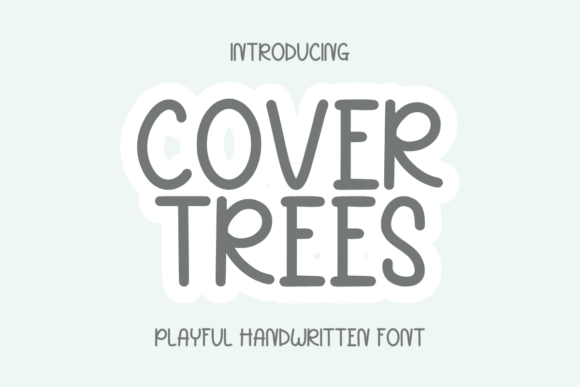
So, what is Cover Trees? At its core, it’s a handwritten script font. But to label it so plainly misses its charm. This typeface has a friendly, unforced rhythm. The letters have a gentle bounce, with just enough variation in their strokes to feel authentically hand-drawn, not mechanically perfect. It carries a mood that’s both cute and sophisticated—whimsical enough for a child’s birthday card but polished enough for wedding stationery. This balance is its greatest strength for product makers. It adds personality without overwhelming the design, allowing your product’s story to shine through the typography.
Whether you’re designing for a rustic farmhouse aesthetic, a modern minimalist brand, or a playful kids' line, Cover Trees adapts. Its visual appeal lies in its readability and its warmth. It doesn’t shout for attention; it invites the viewer in. This makes it an incredibly versatile asset for everything from a single sticker to an entire shop’s branding suite.
Bringing Products to Life with Typography
As a seller, presentation is everything. The fonts you choose directly influence how customers perceive the quality and care behind your items. I’ve used Cover Trees across a surprising range of projects, and each time, it elevates the final product.
For physical goods, it becomes the soul of your packaging. I’ve set it on:
- Candle Labels & Soap Wrappers: It turns simple ingredient lists into elegant features.
- Greeting Cards & Invitations: From “Happy Birthday” on a balloon card to “Save the Date” on a wedding suite, it adds a personal, crafted touch.
- Product Tags & Boutique Packaging: Handwritten-style care instructions or “Thank You” notes on hang tags feel infinitely more special.
- Apparel & Mugs: Cut with a Cricut or Silhouette for heat transfer vinyl, phrases like “Coffee Club” or a family name become charming, wearable art.
- Signs & Wall Art: Whether it’s a digital download for a “Gather” kitchen print or a physical farmhouse-style welcome board, the font’s character stands out beautifully.
For digital creators, Cover Trees is a workhorse in printable designs. It’s ideal for:
- Planner Pages & Sticker Sheets: Headers and decorative elements gain a cohesive, friendly look.
- Wall Art Templates: Quotes and phrases rendered in this font feel inspirational, not generic.
- Card & Invitation Templates: It provides the core stylish text that your customers can easily customize.
Readability and Pairing for Professional Results
A beautiful font is only useful if it works in practice. For small-scale items like stickers and product labels, readability is non-negotiable. I’ve found Cover Trees maintains excellent clarity even at smaller sizes, which is crucial for detailed Cricut cuts or tiny printed tags. When printing physical cards or mockup previews for my shop listings, the characters hold their shape beautifully, with no awkward blobbing or unclear letterforms.
While Cover Trees is stunning on its own for short phrases, titles, and names, it truly sings when paired with another font. Its playful script nature calls for a clean, supporting actor. For body text on an invitation or disclaimer text on a label, I always pair it with a simple, neutral sans serif font. This creates a clean hierarchy: Cover Trees draws the eye for the main headline or product name, and the sans serif provides effortless readability for the details. This kind of thoughtful font pairing is a hallmark of professional design and instantly boosts the perceived value of your creations.
Essential Considerations for Commercial Use
Before using any font like Cover Trees on products you plan to sell, a few practical checks are essential. First, confirm the commercial licensing. Most fonts in this category are sold with a commercial license, but it’s always wise to verify it covers physical products, digital downloads, and any templates you might create. Next, explore the included file formats. You’ll likely need OTF or TTF files for standard design software and printing, and possibly web font formats if you’re using it on your online shop graphics.
Dive into the font’s special features. Does Cover Trees include alternate characters or ligatures? These can add extra uniqueness to words, allowing you to avoid repetitive letter shapes. Check for multilingual support if your market requires it. Understanding the full scope of what you’ve purchased ensures you can use the font to its fullest potential and maintain a consistent, professional brand identity across all your materials.
Your Go-To Font for Seasonal and Everyday Magic
The true test of a great creative font is its adaptability through seasons and trends. I’ve used Cover Trees for delicate spring flower tags, cheerful summer tote bag designs, cozy autumn leaf wall art, and elegant winter holiday gift tags. Its character is flexible enough to be dressed up with holly berries or kept simple with a sun icon. This versatility makes it a foundational tool in my design kit. Instead of searching for a new “festive” font every holiday, I can rely on this one familiar, friendly typeface, adjusting colors and graphics around it to suit the occasion.
In the world of handmade and digital products, the details are what set you apart. The font you choose is far more than just text; it’s tone, personality, and craftsmanship communicated at a glance. Cover Trees, with its handwritten charm and functional clarity, has become one of those indispensable tools for me. It bridges the gap between digital design and the tangible, warm feeling of a handmade item. It’s the font I reach for when I want my work to whisper, “This was made with care.”